
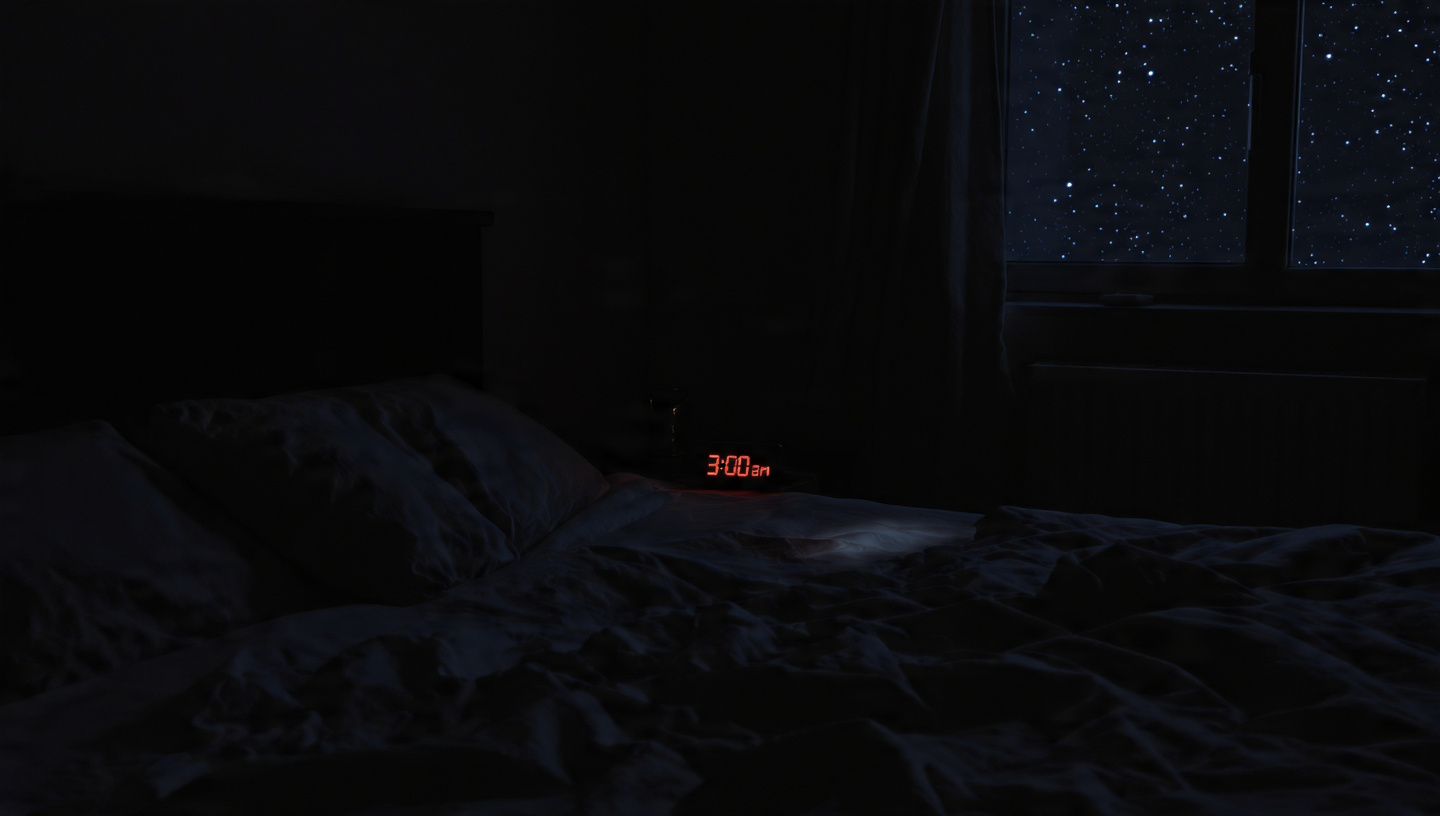
If you fall asleep fine but wake up at 3am and cannot get back to sleep, you are living the signature pattern of menopause insomnia. Up to 60 percent of women in perimenopause and menopause have clinically significant sleep problems — and only a fraction of that is about hot flashes. The larger driver is hormonal: dropping progesterone, unstable estrogen, and a thermoregulatory system that no longer lets you stay unconscious through the second half of the night.
This guide explains exactly why the 3am wake-up happens, what the evidence says works, and what to do when none of it is enough.
Why sleep changes in menopause
Three overlapping shifts:
- Progesterone falls and takes GABA with it. Progesterone produces allopregnanolone, which binds to GABA-A receptors — the same "sleep switch" targeted by benzodiazepines and zolpidem. Less progesterone means a weaker physiological sedative. The result: lighter sleep, earlier awakenings, harder to fall back asleep.
- Estrogen swings disrupt REM. REM sleep concentrates in the second half of the night. Estrogen helps stabilise it — when estrogen is erratic, REM fragments, which is exactly why 3-5am awakenings get worse through perimenopause.
- Thermoregulation narrows. Core body temperature naturally drops during sleep. In menopause, the narrowed thermoregulatory window means small shifts in core temperature feel like hot flashes — and each one fragments sleep, even if you do not consciously remember it.
The 3am wake-up, explained
Most women in menopause describe the same pattern: fall asleep easily around 10-11pm, then jolt awake between 2 and 4am with a racing heart and busy mind. Why that hour?
- Core body temperature reaches its nightly low around 3-4am — the narrowest window of thermoregulatory tolerance
- Cortisol starts its pre-waking climb at 2-3am — in menopause morning anxiety this curve is sharper
- Progesterone is naturally lowest in the early hours — the anti-anxiety buffer is thinnest
- REM clusters here, so you are lighter and more arousable
Put simply: a perfect storm of temperature, cortisol, and neurotransmitter shifts hits at the same hour every night.
Night sweats and sleep fragmentation
Classic teaching ties menopause sleep problems to night sweats. The reality is more layered: you can have hormone-driven insomnia without visible night sweats, and treating the sweats alone often does not fix the sleep. Aim at all three causes (progesterone, estrogen, temperature) rather than one.
7 evidence-based strategies to fix menopause sleep
1. Body-identical progesterone at night
For women eligible for HRT, micronised progesterone taken 1 hour before bed is the single highest-leverage change. Trials consistently show improvements in sleep latency and total sleep time within 2-4 weeks. It also addresses the underlying allopregnanolone deficit rather than masking it. See our HRT guide.
2. CBT for insomnia (CBT-I)
CBT-I is the first-line treatment for chronic insomnia per NICE, AASM, and The Menopause Society. It works as well in menopausal women as in the general population — roughly 70-80 percent response rate. Available as structured programmes, apps (Sleepio, CBT-i Coach), and 1-on-1 therapy. Expect 6-8 weeks.
3. Keep the bedroom at 16-18°C
Not "cool" — cold. The narrowed thermoregulatory window means even a slight overshoot triggers a hot flash. Layered thin bedding you can kick off beats a single duvet. Moisture-wicking sleepwear matters more than people admit.
4. Fixed wake time, even on weekends
Waking at the same time 7 days a week is the single most underrated lever for hormonal insomnia. It stabilises circadian cortisol and melatonin, which in turn tightens the sleep-wake curve. Bedtime flexes; wake time should not.
5. Finish alcohol and food 3 hours before bed
Alcohol is a sleep saboteur that does its damage in the second half of the night — exactly when menopause sleep is most fragile. Even one glass of wine at dinner doubles the frequency of 3am awakenings. Late meals force thermoregulation work at the wrong time.
6. Morning light, movement, protein
Anchoring the day's circadian rhythm at waking is the lever for the night's sleep, not the night itself. 10 minutes of outdoor light within 30 minutes of waking, a short walk, and a protein-forward breakfast. This is also the core of fixing morning cortisol dysregulation.
7. When sleep medications help — and when they do not
Z-drugs (zolpidem, zopiclone) and benzodiazepines are useful for short-term use (2-4 weeks) during a crisis, but not as a solution. They fragment deep sleep and have dependency risks in midlife. Low-dose mirtazapine or trazodone are sometimes used off-label with fewer tolerance issues. Always alongside — not instead of — a plan like CBT-I or HRT.
When to see a doctor
Speak to a clinician if:
- You have 3+ nights of poor sleep per week for more than a month
- You snore heavily, stop breathing in sleep, or wake gasping (rule out obstructive sleep apnoea — weight gain in midlife doubles the risk)
- You are napping against your will during the day
- Sleep loss is affecting work, driving, or mood
- You are using alcohol or over-the-counter sleep aids most nights
NHS menopause guidance and The Menopause Society publish patient-focused sleep resources.
Frequently asked questions
Is insomnia an early sign of menopause?
Often, yes. New-onset sleep fragmentation in your forties — especially the 3am pattern — is a common first sign of perimenopause, and it frequently predates obvious cycle changes by a year or two.
Will melatonin help menopause insomnia?
Modestly. Melatonin works best for sleep-onset problems and for circadian shifts. The 3am wake-up pattern of menopause responds better to progesterone, CBT-I, or temperature control. 0.5-3mg an hour before bed is a reasonable first trial.
How long will menopause sleep problems last?
For most women, sleep improves noticeably within 12-24 months of the final period as hormones stabilise. About a third continue to have sleep issues beyond that, often because an underlying issue (sleep apnoea, anxiety, chronic insomnia pattern) has been revealed.
Is it safe to take progesterone just for sleep?
Micronised progesterone is well-tolerated and not classified as a sleep drug, but it is a hormone — your clinician will consider whether you also need estrogen, whether you have a uterus, and any contraindications. This is a brief appointment conversation, not a DIY decision.
Pick the one lever you can commit to
If HRT is on the table: progesterone at night is the fastest win. If not: CBT-I has the strongest evidence. In both cases, nail the fixed wake time and cool bedroom first. Sleep is the symptom that responds fastest to the right lever — often within 3 weeks.
Log your wake-ups, night sweats, and energy levels with Passage to spot your personal sleep pattern — and bring real data to your next appointment instead of vague "I'm not sleeping well".